
AI Front Desk
AI for Short-Term Rental Hosts: Guest Messages, Check-Ins, and Turnovers
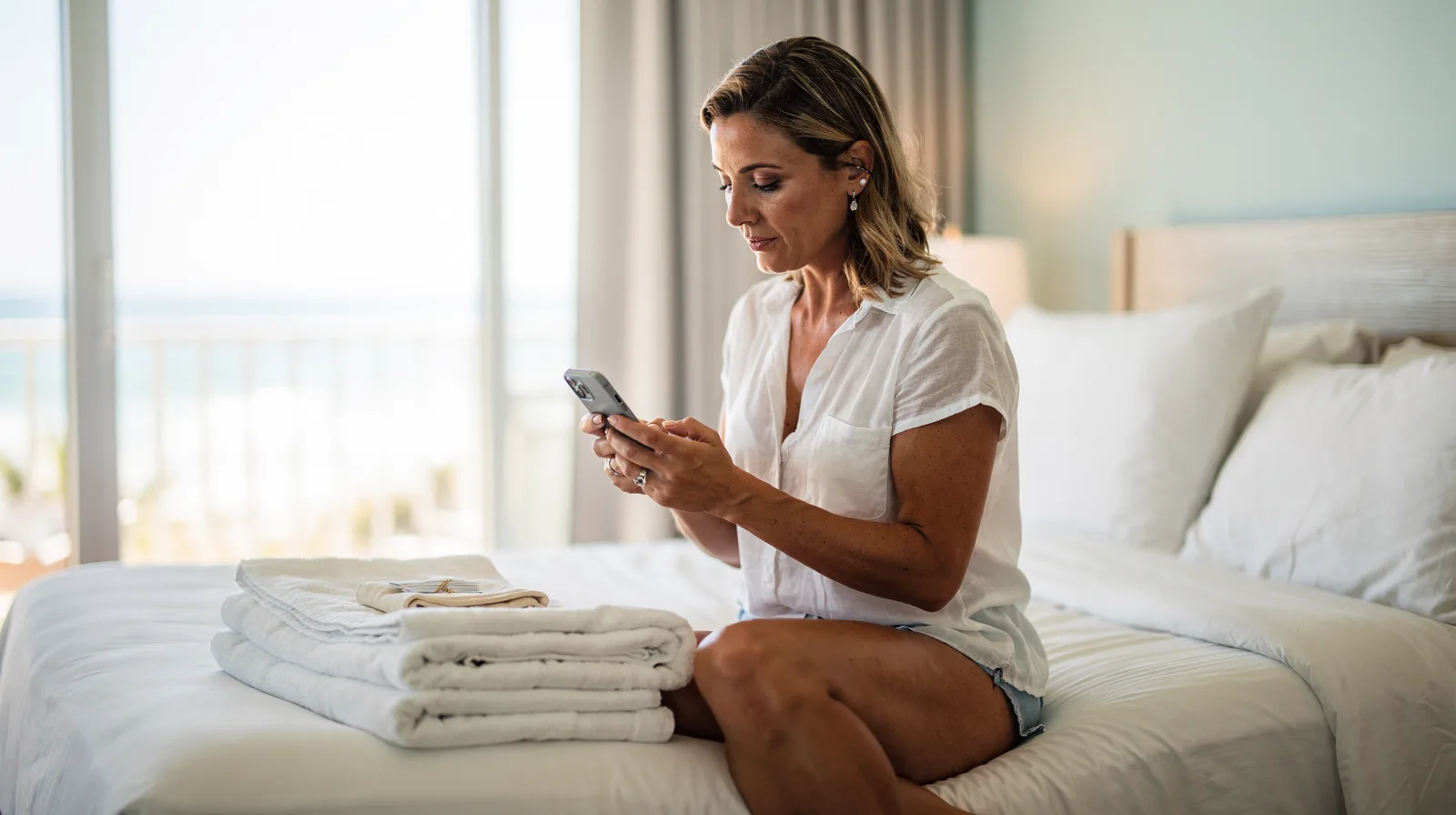
AI helps short-term rental hosts with the repeatable part of the job: answering routine guest questions quickly, sending check-in details on time, and turning each checkout into a cleaning and inspection task. A person keeps anything that goes wrong during a stay. Speed is the reason it matters: Airbnb's Superhost standard asks hosts to answer 90% of new messages within 24 hours, and Vrbo's policy expects a one-hour reply to urgent questions during a stay.
What do the platforms expect from hosts?
Fast, real answers. The two largest platforms set the bar differently:
| Platform | What it measures or requires |
|---|---|
| Airbnb Superhost | Respond to 90% of new messages within 24 hours, a 4.8 or higher rating, under 1% cancellations, and at least 10 reservations or 3 totaling 100 nights, assessed every three months |
| Airbnb response rate | The share of new inquiries and reservation requests answered within 24 hours over the past 30 days |
| Vrbo (Expedia Group) | Critical questions on check-in day and during a stay answered within one hour from 8 a.m. to 9 p.m. property time, 12 hours when check-in is one to four days away, 24 hours when it is further out |
Guests notice. In a survey commissioned by Vrbo in 2026, 56% of travelers said they expect a host to respond in an hour or less if something goes wrong during a stay. A 2021 study in the Journal of Business Research across 22 cities found Superhost status, host response time, and communication with guests among the strongest predictors of bookings.
Where does AI help most?
At each stage of a stay, on the work that repeats:
| Stage | What AI handles |
|---|---|
| Before booking | Answers questions about the space, dates, and rules inside the platform's messaging |
| After booking | Sends confirmations, house rules, and check-in details on schedule |
| Before arrival | Delivers access instructions on time. Airbnb shows detailed check-in instructions 48 hours before check-in, and connected smart locks send a unique code at booking, with reminders 8 and 2 days ahead |
| During the stay | Answers routine questions, such as Wi-Fi, parking, and checkout time, and logs a work order when something breaks |
| At checkout | Creates the turnover: a cleaning task, an inspection, and an inventory check before the next guest |
Airbnb's own scheduled quick replies cover the simplest version, sending templates on triggers like a new reservation, check-in, or checkout. Cream Digital's Property Supplai goes further for managers: guest messaging by SMS and email, short-term reservations, maintenance work orders with vendor assignment, inspections, per-property inventory, and a unified inbox where a person can take over any conversation. For the long-term rental side of the same platform, see AI for property managers.
What should stay with a person?
Anything that has gone wrong. A lockout, a leak, a noise complaint, or a guest who is unhappy needs someone who can decide and act. Expedia Group's policy is explicit that automatic replies do not count as an adequate response, so an AI that only acknowledges a message does not meet the standard. The AI's job is to recognize the urgent message, alert the right person immediately, and hand over the full conversation, the pattern described in human-in-the-loop handoffs.
What platform rules shape automated messaging?
Three matter most:
- Keep pre-booking messages on the platform. Airbnb's payment and communication rules say all communication before a booking must happen on Airbnb, and hosts may not ask guests to pay outside it. An AI that moves inquiries to text or WhatsApp breaks that rule. WhatsApp has its own platform rules too, covered in answering customers on WhatsApp with AI.
- Disclose devices. Airbnb banned indoor cameras from April 30, 2024, even when turned off. Exterior cameras must be disclosed, and noise monitors are allowed if disclosed and kept out of bedrooms, bathrooms, and sleeping areas.
- Show the total price. If you take direct bookings, the FTC's fees rule, in effect since May 12, 2025, requires mandatory fees such as cleaning fees to be included in the advertised total.
What do Florida hosts need to know?
A few state rules shape the operation, as of 2026:
- A license. A unit rented to guests more than three times a year for under 30 consecutive days, or advertised that way, is a transient public lodging establishment, and vacation rentals, as defined in statute, must hold a license from the Division of Hotels and Restaurants.
- Taxes. Transient rentals owe 6% state sales tax plus any county surtax and tourist development tax. In Miami-Dade, local transient rental taxes total 6% in most of the county, 7% in Miami Beach, and 4% in Surfside and Bal Harbour, and they are paid to the county. Airbnb collects some of these for hosts but not all, so check your county.
- Written notice to leave. Since July 1, 2025, a notice to a guest who fails to check out or pay must be in writing, by email, text, or printed paper, under SB 606.
- Local limits. Local governments may not prohibit vacation rentals or regulate how long or how often they are rented, unless the rule was adopted on or before June 1, 2011.
This is general information, not legal or tax advice. Check with the state, your county, and your accountant.
What should a host measure?
Response time, check-in problems per stay, turnovers finished before the next arrival, maintenance requests per stay, and review scores. If the AI is working, the first four fall and the last one holds or rises. Cream Digital builds the same kind of guest-facing system in its front desk operations work, whether the guest is a patient or a traveler.
Key facts
- Airbnb Superhosts must respond to 90% of new messages within 24 hours, keep a 4.8 or higher overall rating, and keep cancellations under 1%, assessed every three months over the past 12 months.Source: airbnb.com/help/article/829
- Expedia Group's host communication policy for Vrbo asks hosts to answer critical questions on check-in day and during a stay within one hour between 8 a.m. and 9 p.m. property time, and says automatic replies do not count as an adequate response.Source: expediagroup.com/en-us/marketplace-policies/host-communication-policy
- Airbnb requires all communication before a booking to stay on Airbnb, and hosts may not ask guests to pay outside Airbnb.Source: airbnb.com/help/article/2799
- Florida vacation rentals, like other public lodging establishments, must be licensed by the Division of Hotels and Restaurants.Source: flsenate.gov/Laws/Statutes/2026/509.241
- The FTC's rule on unfair or deceptive fees, in effect since May 12, 2025, requires short-term rentals to include mandatory fees such as cleaning fees in the total price they advertise.Source: ftc.gov/business-guidance/resources/rule-unfair-or-deceptive-fees-frequently-asked-questions
Frequently asked questions
Can AI answer Airbnb guest messages?
Yes, within Airbnb's rules. Airbnb's own scheduled quick replies send messages on triggers such as a new reservation, check-in, or checkout, and software connected to Airbnb can answer inside its messaging. Before a booking, every message must stay on Airbnb, so do not move guests to text or WhatsApp to get an AI reply.
Does an automatic reply count toward response time?
Not on Vrbo: Expedia Group's host communication policy says automatic replies do not count as an adequate response. Whatever the platform, a reply should answer the guest's question, not just acknowledge it, and urgent problems need a person.
Do Florida short-term rental hosts need a license?
If the unit is rented more than three times a year for under 30 days at a time, or advertised that way, it is a transient public lodging establishment and needs a license from the Division of Hotels and Restaurants. Taxes apply too. Check with the state and your county.
Can hosts use noise monitors or cameras?
On Airbnb, indoor cameras are banned, even if turned off. Exterior cameras must be disclosed in the listing, and noise monitors are allowed if disclosed and not in bedrooms, bathrooms, or sleeping areas.