
AI Front Desk
AI Receptionist vs. Answering Service: Which Should Your Practice Use?
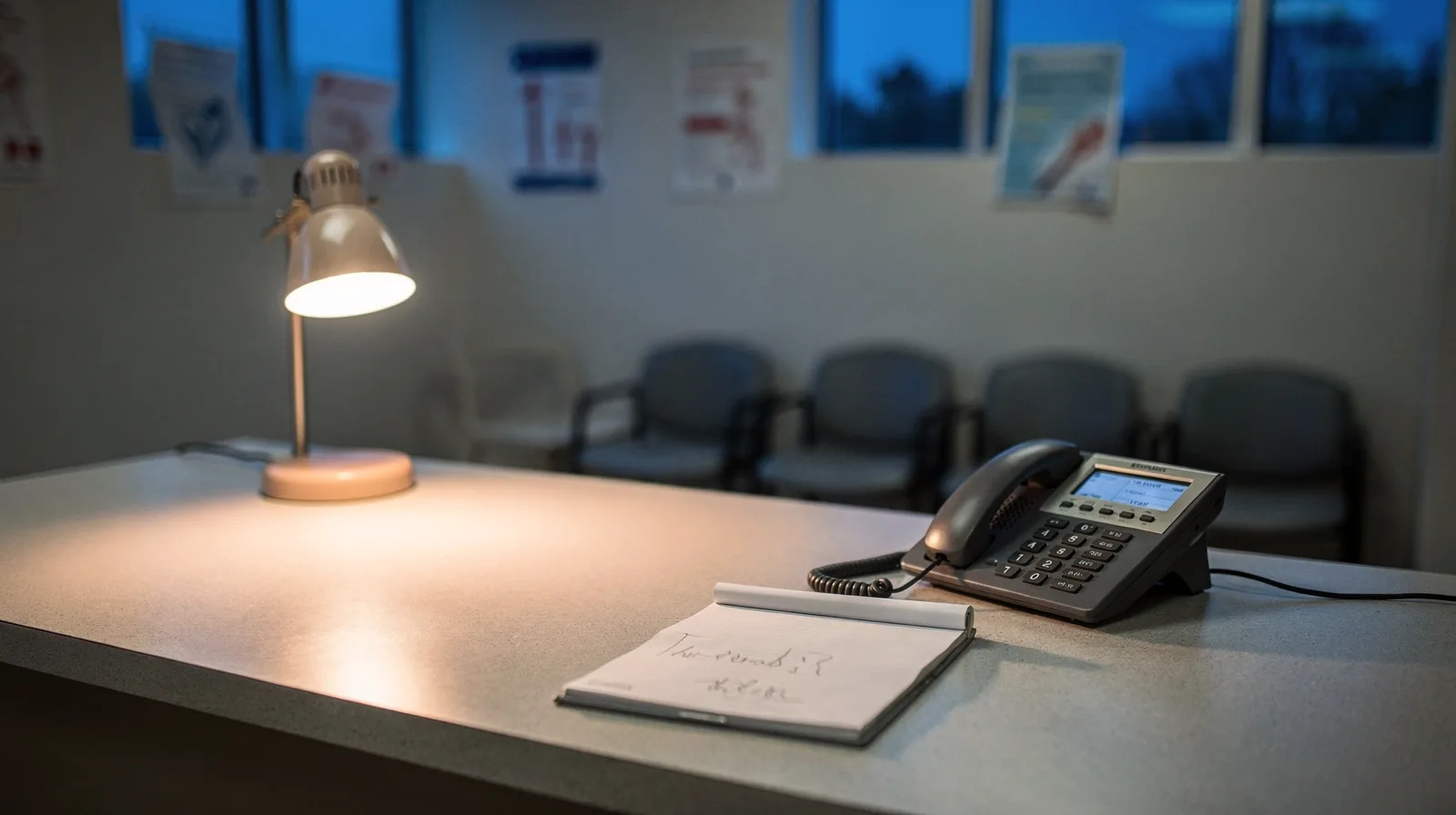
It depends on what you need to happen after the call. An answering service takes a message for your staff to return. An AI receptionist can finish the task: book the appointment, send intake forms by text, route a refill request, and leave staff a completed task instead of a callback. Live operators still make sense when a call needs urgent clinical judgment, which is why many practices use both.
What does a traditional answering service do?
It answers when you cannot and writes down what the caller needs. Operators follow your script, take a name, number, and reason, and pass urgent calls to the on-call provider. The next morning, your staff work through the messages and call people back, the delay described in what happens to calls after your office closes.
That model protects you from voicemail, and a human voice matters for some callers. Its limit is that the operator usually cannot get into your schedule or your systems, so most calls end as a message, not as an answered request.
That matters because scheduling is a large share of the phone load. In a March 2026 MGMA Stat poll of 294 practice leaders, 31% named scheduling as their most time-consuming phone task, behind only eligibility and prior authorization at 45%. Patients also want it available around the clock: in Experian Health's 2025 State of Patient Access survey, 80% agreed they would like to schedule appointments anytime, from home or a mobile device.
What does an AI receptionist do differently?
It works inside your systems, so the call can end with the job done. Depending on what your EHR allows, an AI receptionist can book directly into the schedule, text the intake packet and an insurance card request, and send each request to the right person.
At Happy Minds Wellness, a Florida psychiatry practice, staff forward the main line to the AI when the office closes. Returning patients are greeted by name, new patients get their intake packet by text as soon as the call ends, and refill requests reach the patient's actual prescriber, with a page for urgent ones. Larger practices split the work across several agents with one job each; one chiropractic group runs twelve AI voice agents.
How do an AI receptionist and an answering service compare?
| Answering service | AI receptionist | |
|---|---|---|
| What the call ends with | A message for staff | Usually a finished task: a booking, a form sent, a routed request |
| Access to your schedule | Usually none | Reads and books where the EHR allows |
| Knows returning patients | Only from what the caller says | Can look them up before answering |
| Capacity at peak times | Limited by operators on shift | Answers many calls at the same time |
| Languages | Depends on the operators on shift | Can answer in English, Spanish, and other languages |
| Urgent clinical calls | A person decides who to page | Hands off to a person or the on-call line |
| What staff find in the morning | A list of callbacks | A short list of tasks that need a decision |
The row that matters most is the first one. A message still needs a person to finish it. A task the AI already finished does not.
When is an answering service still the better choice?
When the call needs a human decision right away. Practices with on-call physicians often want a person deciding which calls justify waking the doctor, and some patients simply want a human voice. Those are good reasons to keep a live line for urgent calls.
The common setup is a split: the AI receptionist handles the routine calls, which are most of them, and urgent or clinical calls go to the answering service or the on-call provider, exactly as they do today.
How do you switch without losing calls?
Start small and run both:
- Begin after hours. Forward the main line to the AI when the office closes, the way Happy Minds did, and keep the answering service as the route for urgent calls.
- Write the handoff rules first. Decide which calls always go to a person: clinical questions, emergencies, upset callers, and anyone who asks.
- Review every call for the first weeks. Read the transcripts and fix the scripts before you expand.
- Add overflow, then daytime. When after-hours works, let the AI catch calls your team cannot get to during the day.
The patients you are answering may have found you through an AI assistant in the first place, which is worth knowing too: how patients find doctors through ChatGPT.
What should you measure?
Five numbers each week: calls answered, appointments booked, forms sent, tasks created for staff, and callers who asked for a person. If tasks for staff stay high, the handoff rules or the scripts need work. That is the setup Cream Digital builds in front desk operations.
Key facts
- In a March 2026 poll of 294 practice leaders, 31% named scheduling and 45% named eligibility and prior authorization as their most time-consuming phone task.Source: MGMA Stat, March 10, 2026
- 80% of patients agreed they would like to schedule appointments anytime, from home or a mobile device.Source: Experian Health, State of Patient Access 2025
- Happy Minds Wellness forwards its main line to an AI front desk after hours, and refill requests reach the patient's actual prescriber.Source: creamdigital.ai/case-studies/happy-minds-wellness
Frequently asked questions
Can an AI receptionist handle medical emergencies?
It should not try. A well-built AI receptionist recognizes urgent or clinical calls and hands them to a person or an on-call line, and tells callers describing an emergency to hang up and call 911.
Will patients know they are talking to AI?
They should. A well-built AI receptionist says it is an AI assistant at the start of the call, and callers can always ask for a person or leave a message for staff.
Can I keep my answering service and add AI?
Yes, and many practices start that way. The AI handles routine calls such as booking, rescheduling, and intake, and urgent or clinical calls still go to the answering service or the on-call provider.