
AI Front Desk
Can an AI Receptionist Handle Spanish-Speaking Callers?
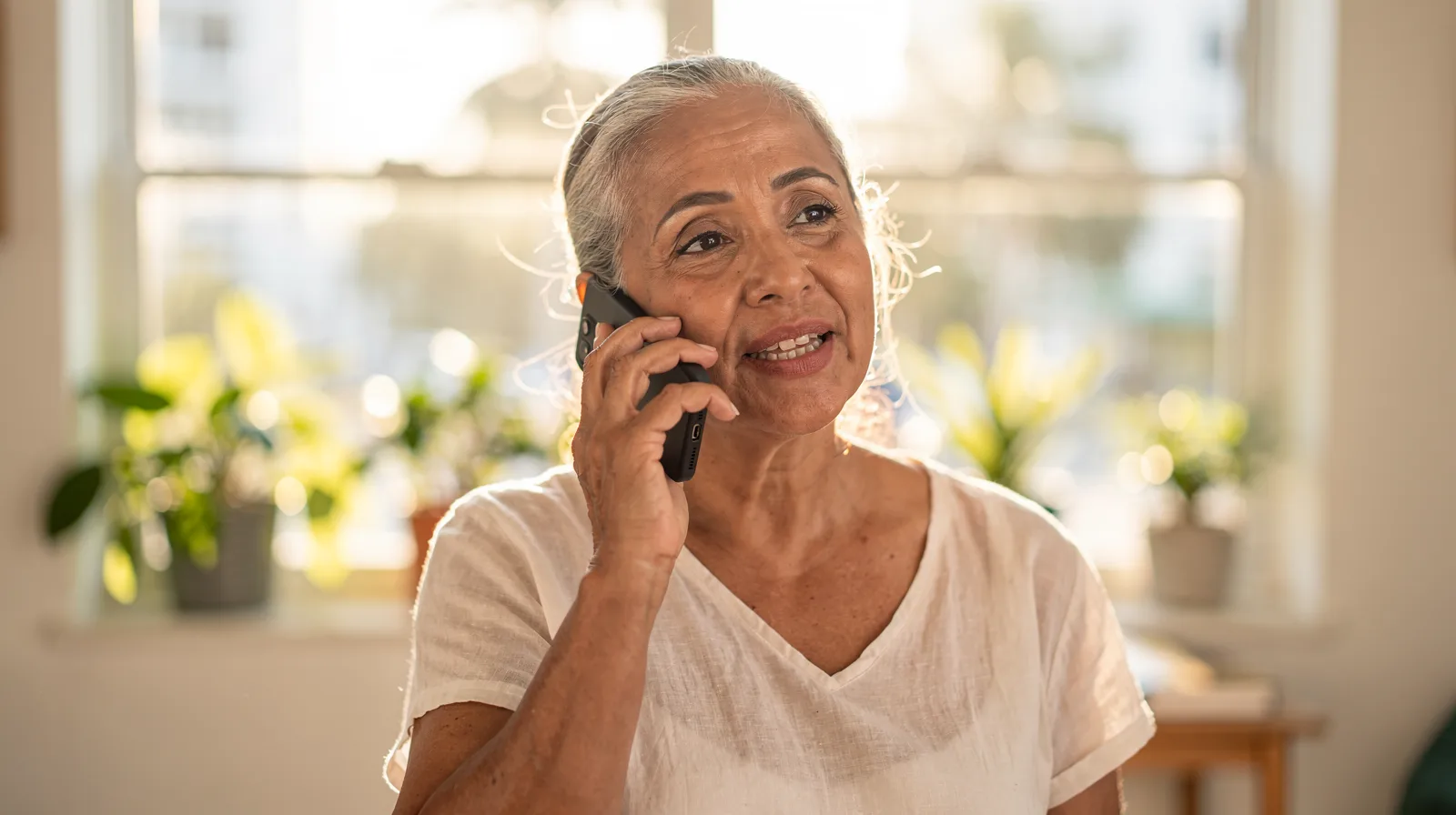
Yes. A bilingual AI receptionist can greet callers, detect or ask which language they prefer, and handle the whole call in Spanish: booking, rescheduling, intake, and routing. It should stay in one language per call, hand off to a Spanish-speaking person when the call needs one, and leave clinical and legal content to qualified people, which is also what language access rules expect.
Why does Spanish matter so much for a practice in South Florida?
Because most people there speak it at home. In the Census Bureau's 2024 American Community Survey, the newest available, 67.0% of Miami-Dade County residents age 5 and over spoke Spanish at home, compared with 23.4% across Florida and 13.9% nationally (Census table S1601). About half of those Spanish speakers, 49.9%, said they speak English less than "very well."
It matters for care, not just convenience. A systematic review in Health Services Research found that professional interpreters raise the quality of clinical care for patients with limited English proficiency to near the level of patients without language barriers.
For a practice or a law firm in Miami, a front desk that only works in English turns away a large share of the people who call.
How do bilingual AI agents handle the language?
Three patterns show up in the systems Cream Digital runs:
- Answer in either language from the first word. At Sigma Orthopedics, which serves patients in New York, Philadelphia, and South Florida, the agents answer new and existing patients in English and Spanish, with separate paths for personal injury (PIP) cases and law firms.
- Route by language and by need. At Back to Mind, a South Florida chiropractic group, the intake agent answers in English or Spanish, captures intake, and routes each caller to the right office or team.
- Keep to one language per call. At Happy Minds Wellness, the agent keeps to one language per call and hands off when a person is needed, so the conversation never drifts between the two.
Arcadia Neuropsychology's AI receptionist also handles Spanish-speaking callers, along with cancellations and reschedules, while it books evaluations directly into the practice's EHR.
What should an AI receptionist never translate on its own?
Anything where a mistake could hurt someone. Booking, rescheduling, directions, office hours, and intake questions are routine, and an AI agent handles them well in either language. Clinical instructions, medication questions, consent forms, and legal advice are different: those need a qualified person.
For medical practices, this is also a legal question. Section 1557 of the Affordable Care Act covers health programs that receive federal financial assistance, which the 2024 rule says includes Medicare Part B payments, so most practices that take Medicare are covered. Its language access rule (45 CFR 92.201) requires language help to be free, accurate, and timely, from qualified interpreters or translators. If a practice uses machine translation for content that is critical to a patient's rights or care, or where accuracy is essential, a qualified human translator must review it.
Those provisions are still in force: a 2025 court decision vacated only the rule's gender-identity sections, and HHS confirmed in June 2026 that the other provisions remain in force. A 2025 executive order made English the official language of the United States, but it did not change this rule. The rule does not address AI voice agents directly, so the safe setup is the one above: the AI handles scheduling and routing in Spanish, and a qualified interpreter or bilingual staff member handles anything clinical or rights-related. Section 1557 covers health programs, not law firms, but the same split is good practice for any firm.
What should the handoff to a person look like?
The same as any human-in-the-loop handoff, with one addition: route Spanish-speaking callers to someone who speaks Spanish. The handoff message should say which language the caller chose, so nobody calls back in the wrong one. If no Spanish-speaking staff member is available, the agent should say when someone will call back, in Spanish, and keep that promise.
How do you test a bilingual AI receptionist before it goes live?
Call it the way your patients would:
- Start in Spanish and confirm it stays in Spanish through booking.
- Use local vocabulary and accents, including how your patients actually say your services and insurance plans.
- Ask for a person and check that you reach a Spanish speaker, or a clear callback promise.
- Mix in names and addresses, which are where transcription errors show up first.
- Read the transcripts for the first weeks, in both languages.
Bilingual answering is part of every AI front desk Cream Digital builds in front desk operations. For how it fits with your existing phone coverage, see AI receptionist vs. answering service.
Key facts
- 67.0% of Miami-Dade County residents age 5 and over speak Spanish at home, and 49.9% of them speak English less than very well.Source: U.S. Census Bureau, American Community Survey 2024, table S1601
- If a covered health program uses machine translation for critical content, a qualified human translator must review it.Source: 45 CFR 92.201(c)(3)
- HHS confirmed in June 2026 that the Section 1557 rule provisions outside the vacated gender-identity sections remain in force.Source: HHS OCR and CMS notice, 91 FR 32887, June 2, 2026
- Sigma Orthopedics' AI agents answer new and existing patients in English and Spanish.Source: creamdigital.ai/case-studies/sigma-orthopedics
Frequently asked questions
Will the AI switch languages in the middle of a call?
It can, but a well-built agent keeps to one language per call once the caller chooses, so the conversation stays clear. The handoff to a person should go to someone who speaks the caller's language.
Can the AI translate medical instructions?
It should not be the only translator for anything clinical. Under the federal language access rule, machine translation of content that is critical to a patient's rights or care must be reviewed by a qualified human translator, and interpreting should come from qualified interpreters or bilingual staff.
Do Spanish-speaking callers accept an AI receptionist?
Callers mostly want to be understood and helped quickly. An agent that answers in their language on the first ring, books the appointment, and reaches a Spanish-speaking person when needed is a better experience than a voicemail in English.