
AI Front Desk
Can AI Make Your Customer Reminder Calls?
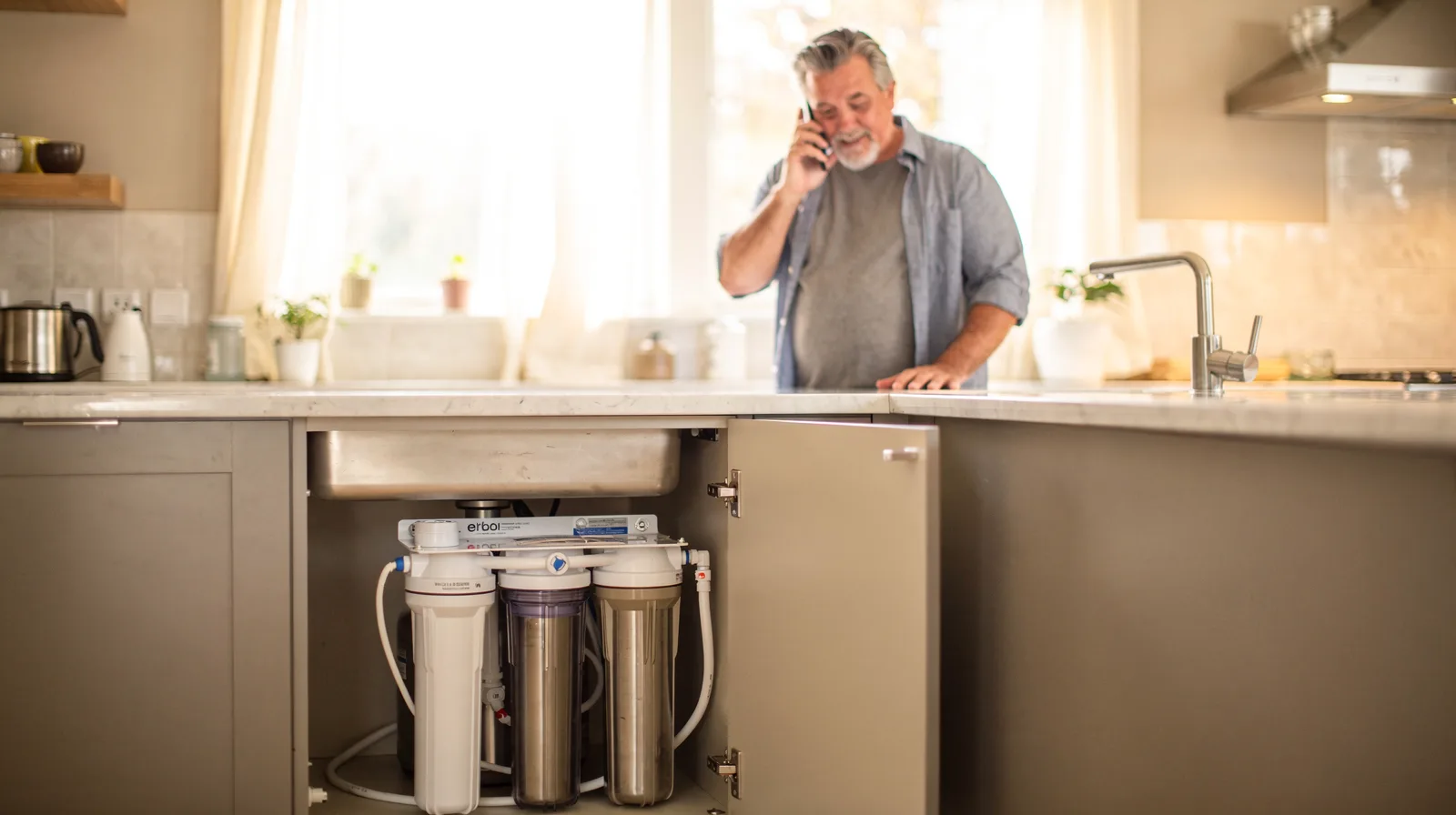
Yes, if the calls are informational and the customer gave you their number for that relationship. An AI voice counts as an artificial voice under federal rules, so reminder calls to cell phones need the customer's prior express consent, and a reminder that also tries to sell needs written consent. Built well, the AI makes the call, answers questions, and transfers to a person only when someone is free to take it.
This is general information about the rules as of October 2026, not legal advice.
What does an AI reminder call actually do?
AquaLife USA, which installs and services water-filtration systems in the New York area, is building one. Its outbound maintenance dialer, now in final testing with the AquaLife team, works like this:
- Four agents, in English or Russian, and for customers with or without a protection plan, so each call starts from what the customer actually has.
- Lists from Salesforce, with a second number tried when the first does not answer.
- A live transfer only when a seat is open. Otherwise the customer gets a scheduling link by text.
- Every outcome written back to Salesforce, so the team's dashboard and retry rules stay accurate.
A dialer like this needs enough concurrent calls and registered texting behind it, the same building blocks described in building a white-label AI voice platform.
AquaLife's inbound AI line has been in production since late 2024. From December 2024 to September 2025, it handled about 19,700 AI voice minutes, 64% of them in Russian.
What consent do reminder calls need?
Three rules decide it:
- Informational calls need prior express consent. Under 47 CFR 64.1200(a)(1), a call to a cell phone made with an artificial or prerecorded voice needs the called party's prior express consent. Written consent is required only for telemarketing.
- An AI voice is an artificial voice. The FCC ruled in February 2024 that the TCPA's limits on artificial voices cover AI-generated voices.
- Giving you a number usually counts, within limits. The FCC has long held that people who knowingly give a business their number have given permission to be called at it, absent instructions otherwise, and in its 2015 ruling said calls should be closely related to the purpose the number was given for.
Opt-outs must be honored within 10 business days. The FCC adopted revisions to its opt-out rules on September 30, 2026, including letting an opt-out from informational calls apply only to that category, but they take effect 30 days after Federal Register publication, which had not happened as of mid-October (FCC 26-67).
When does a reminder become a sales call?
When it tries to sell. The FCC treats a call as an advertisement if it is intended to offer goods or services for sale, during the call or later (FCC 03-153), and robocalls that include an advertisement need prior express written consent. Florida's Telephone Solicitation Act applies its consent rule to sales calls too.
Compare two scripts:
Informational: "Hi, this is AquaLife. Your filter is due for its scheduled change. Reply or call us if you have questions."
Dual purpose: "Hi, this is AquaLife. Your filter is due. Want us to ship a replacement today?"
The second one sells, so treat it as marketing and get written consent first. If you are not sure which side a script falls on, ask counsel before the calls go out.
How do you run AI reminder calls well?
Five practices:
- Call from the system of record, so the list, the outcomes, and the retries live in one place.
- Match the customer's language, as covered in handling Spanish-speaking callers.
- Transfer only when someone can take it. Otherwise, send a link or a callback time.
- Respect calling hours. Federal rules bar telephone solicitations before 8 a.m. and after 9 p.m. local time, and Florida's window for solicitations is 8 a.m. to 8 p.m.
- Stop the moment someone asks, and record it.
The same consent rules apply to texts and to older leads, covered in reviving old leads within the rules, and to rent and maintenance reminders, covered in AI for property managers. Cream Digital builds reminder and follow-up calling as part of front desk operations.
Key facts
- Informational calls to cell phones made with an artificial or prerecorded voice require the called party's prior express consent.Source: 47 CFR 64.1200(a)(1)
- The FCC ruled in February 2024 that AI-generated voices are artificial voices under the TCPA.Source: FCC 24-17
- The FCC treats a call as an advertisement if it is intended to offer goods or services for sale during the call or in the future.Source: FCC 03-153, paragraph 142
- AquaLife USA's AI line handled about 19,700 voice minutes from December 2024 to September 2025, 64% of them in Russian.Source: creamdigital.ai/case-studies/aqualife-usa
Frequently asked questions
Is a reminder call the same as a robocall?
Under the TCPA, a call that uses an artificial or prerecorded voice, including an AI voice, is treated like one for consent purposes. The difference is the content: an informational reminder needs prior express consent, while a call that sells needs prior express written consent.
Can the reminder offer to schedule service?
Be careful. If scheduling means selling something, such as a paid replacement, the call is likely an advertisement under FCC rules and needs written consent. Have counsel review the script.
Is this legal advice?
No. It summarizes federal and Florida rules as of October 2026 for planning. Have a lawyer review your consent language and scripts before you start calling.